
Not too long ago, Atlassian had a vision: become the number one Development tool company in the world. And at one point in the last decade, this vision almost came true. In 2010, Bitbucket was acquired by Atlassian, and when combined with other Atlassian tools of the era (HipChat, Bamboo, Jira Software, and Jira Service Desk), the platform was unstoppable.
Today, Atlassian primarily focuses on Work Management, with solutions such as Jira, Jira Service Management, and Confluence, solving business and some development challenges using Atlassian Intelligence (A.I.), Rovo, and more. Even in its ‘System of Work’ diagram that has been presented annually at TEAMS, Atlassian has quietly added GitLab and other products that customers can easily integrate with Jira.
Figure 1: Atlassian’s System of Work
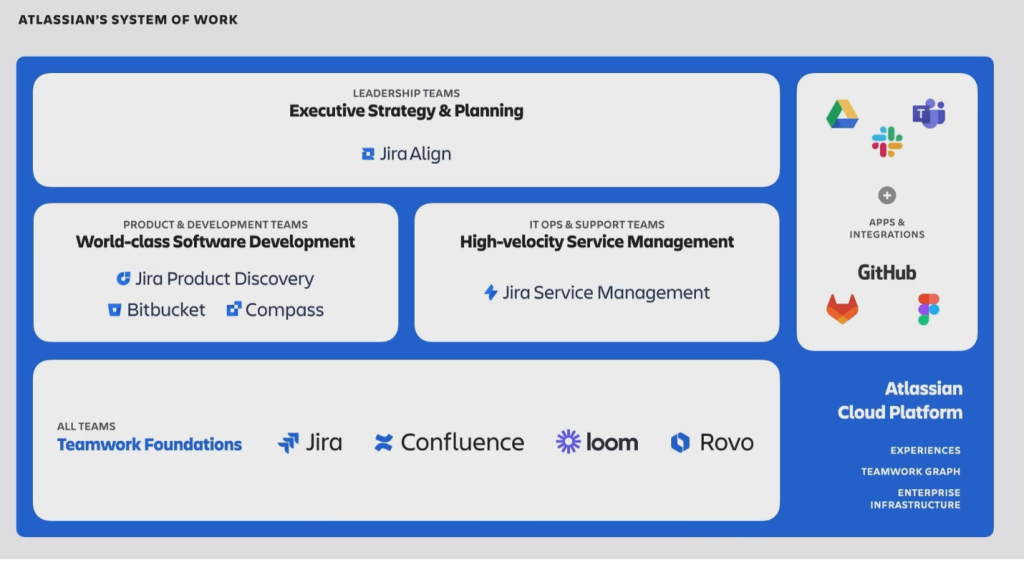
Why do I say all of this? Prior to founding GitSimple, I was both a CEO of an Atlassian Gold Partner and an EVP of a Platinum Partner. I have been a strong supporter of Atlassian since 2008, as a customer as well as a partner. There will always be a part of me that cheers on Atlassian when it comes to work management. But the more we work with customers at GitSimple, the more evident it becomes that Bitbucket has not kept pace with developments in DevSecOps. Instead, developers (whose organizations may use Jira and other Atlassian solutions) are opting for GitLab for their development, testing, and CI/CD requirements.
Why are organizations leaving Bitbucket and turning to GitLab?
Organizations are migrating from Bitbucket to GitLab for several reasons. GitLab’s platform is more complete out-of-the-box and comes ready to scale with teams’ needs. Atlassian’s push to cloud-hosted products is another reason teams are switching, GitLab still supports self-hosted deployments. GitLab’s Duo AI platform is also ahead of Atlassian’s Rovo in many features developers need.
Platform & Scalability
Both Premium and Ultimate options from GitLab are built to scale out of the box. They come ready with CI/CD, testing, and project management capabilities. Given GitLab’s comprehensive approach to DevSecOps, everyone on the team, from project managers to software developers, can make use of the tool from day one.
In contrast, Bitbucket’s limited ability to scale necessitates integration with other Atlassian products such as Jira and Confluence. Said another way, Bitbucket’s functionality is limited to version control capabilities. With this, users must enhance Bitbucket with other apps and integrate it with additional Atlassian products in order to arrive at an organization-wide solution. Because of this, GitLab vs. Bitbucket is really not a fair comparison.
GitLab and Self-Hosted Options
As of February 15, 2024, Bitbucket Server (as well as all Atlassian Server product support) was ended by Atlassian. And most recently as of September 2025, Data Center will be discontinued in 2029. This sunset forced all users to choose from one of the following options:
- Migrate to the Cloud
- Migrate to another tool
This polarizing move by Atlassian messaged to the market the company’s unwavering commitment to the Cloud, while also foreshadowing a similar fate for its Data Center offering in the not-so-distant future. While many of Atlassian’s new Bitbucket features exclusively address its Cloud product, Bitbucket Data Center was excluded from the Atlassian Intelligence rollout, and recent Data Center updates were limited to its security capabilities. Many Bitbucket Server and Data Center customers have picked up on this neglect. Unsatisfied with the remaining options from Atlassian and its Cloud-only roadmap, customers have used this as an opportunity to leave Bitbucket all together in favor of other DevSecOps tools.
While Atlassian pursues its cloud-centric approach with Bitbucket, GitLab continues to support a variety of hosting models for its customers. GitLab delivers all of its cloud capabilities on its self-hosted solution and has included hosted and cloud offerings in its AI-package, GitLab Duo. Speaking of Duo…
GitLab Duo & AI
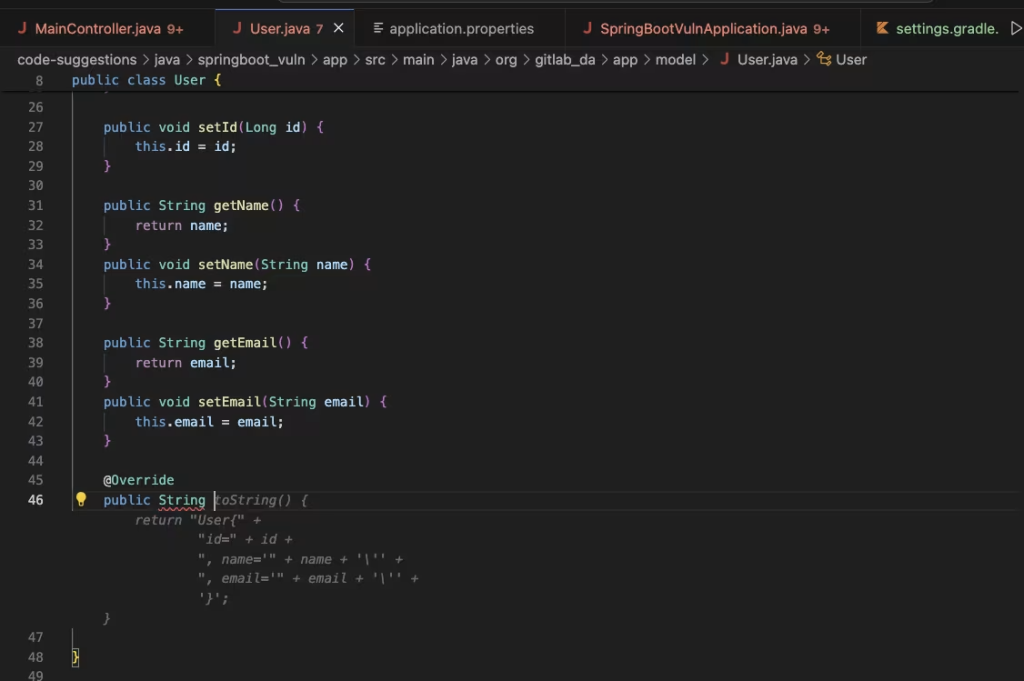
GitLab Duo is an absolute gamechanger. Here at GitSimple, we’re huge fans and have written a comprehensive buyer’s guide on the AI solution, which can be found here. Duo’s AI capability is highly customizable, allowing you to utilize different LLMs to support code suggestions, chat within your IDE, root cause analysis (finding where a build may have broken), testing, and security support. In contrast, Bitbucket’s Atlassian Intelligence is limited to AI-assisted pull requests. Atlassian has been quick to try to get back in the game with Rovo Dev and the acquisition of DX in 2025, but some have seen this as too little, too late. Is Atlassian simply a project management tool, with some software development capabilities?
Figure 2: Bitbucket Atlassian Intelligence (AI) Capabilities
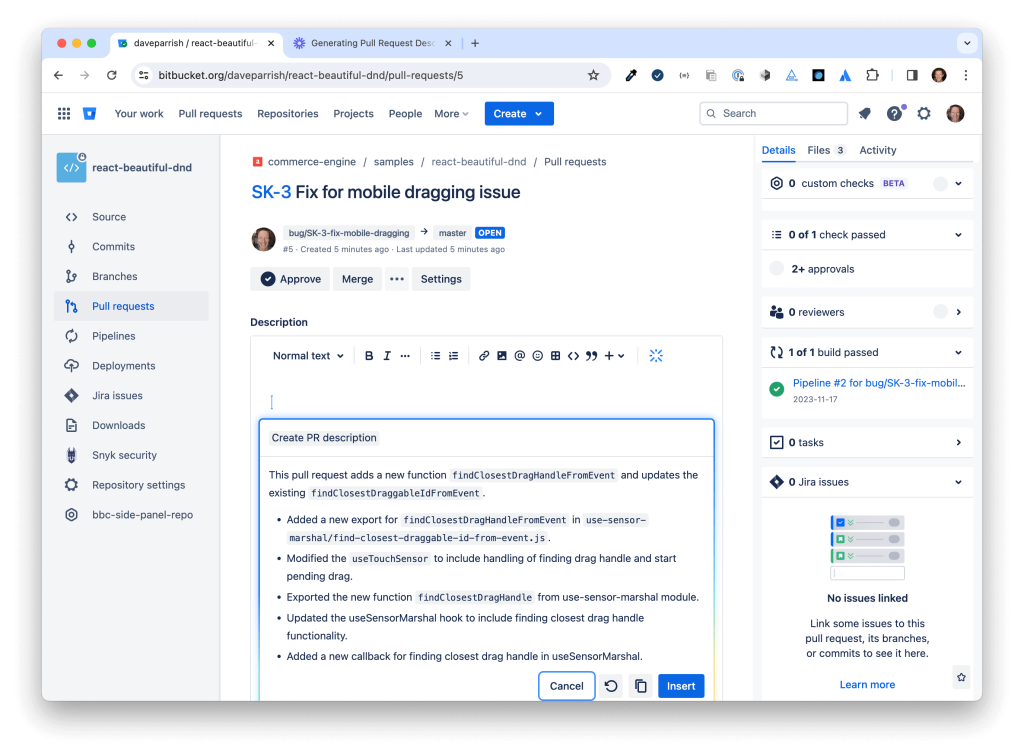
Figure 3: GitLab Duo AI Capabilities – Refactoring Code
Conclusion
While Bitbucket may have been the tool of choice in the past, wowing developers with a fully integrated development platform (with Jira Software, Confluence, Jira Service Management, etc.), it is quickly falling behind other tools in the marketplace, with many developers on Stack Overflow and Reddit threads discussing the numerous challenges they face using the tool. If you’re a Bitbucket customer and interested in exploring alternatives, contact us today – we’d be happy to walk you through GitLab!